
Order Center Troubleshooting & FAQs

Why I should not request fulfillment on Shopify?

Update on: 22/07/2025

Table of contents

Zopi Triggers Fulfillment ActionsConflicting SignalsNo Supplier Order PlacedNo Tracking Synced by ZopiCustomer Dissatisfaction and Manual WorkWhat to Do Instead

You should NOT mark orders as fulfilled directly on Shopify (i.e., by manually marking an order as fulfilled in Shopify’s admin) if you want Zopi to manage the automated fulfillment process with your supplier. Here’s why:

Zopi is designed to automate the order process with your supplier. When an order is placed in your Shopify store and Zopi is connected, it waits for you (or is set up to automatically) to “order” or “fulfill” that item within the Zopi app. This action triggers the purchase from your Zopi, AliExpress, eBay, or Temu supplier.

If you mark an order as “fulfilled” in Shopify before Zopi has processed it with the supplier, you essentially inform Shopify that the order is complete. Consequently, Zopi will not recognize that it needs to place the order with the supplier. It will see the order as already fulfilled on Shopify’s end and will not initiate the purchase.
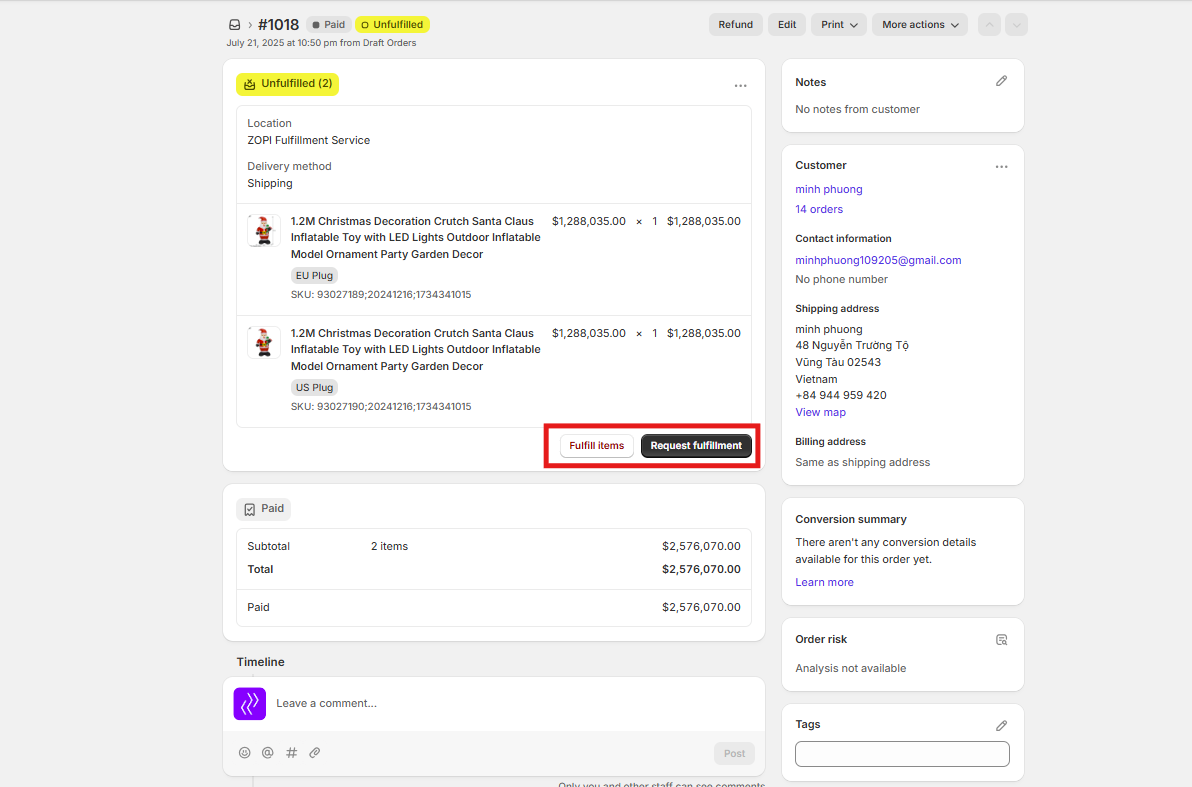
The most critical consequence is that no actual order will be placed with your dropshipping supplier. Your customer will have paid you, and their order will show as “fulfilled” in Shopify, but the product will never be shipped from the supplier’s warehouse.

If Zopi doesn’t initiate the order with the supplier, it won’t receive tracking information. As a result, Zopi won’t be able to sync that tracking information back to your Shopify order, leading to a “fulfilled” order in Shopify without any tracking details.

This situation can lead to significant customer dissatisfaction when they don’t receive their product. You will then have to manually place the order with the supplier and update the tracking information, which defeats the purpose of using Zopi for automation.

If you have already marked an order as fulfilled in Shopify, you need to revert that status to allow Zopi to re-fulfill the order. Here’s the correct workflow:

  1. Revert the Fulfillment: Click the “Revert” button in Zopi for the order that was marked as fulfilled in Shopify.
  2. Confirm the Order in Zopi: Once reverted, you (or Zopi, if set to auto-fulfillment) can confirm and initiate the fulfillment for that order within the Zopi app.
  3. Zopi Places the Order: Zopi will then place the order with the supplier.
  4. Supplier Ships the Product: The supplier will ship the product and provide tracking information.
  5. Sync Tracking Information: Zopi will automatically sync the tracking information back to your Shopify order, marking it as “fulfilled” with the correct tracking number.

By following this process, you ensure that Zopi can effectively manage your orders and maintain customer satisfaction.

Related articles

How to buy and order on TikTok Shop US?

Found something you love and ready to make your purchase? You can buy on TikTok Shop US directly from the Shop tab, your feeds (For You, Following, Friends, and LIVE), and search results. How to Buy on TikTok Shop US Method 1: Purchase from the Shop Tab Open the TikTok app and tap on Shop….

Why can’t I find some orders in Order Center?

There are two primary reasons why Shopify orders may not appear in the Order Center: 1. Payment Status Zopi only displays orders that are marked as PAID + UNFULFILLED in Shopify. To ensure your orders are visible, follow these steps: Verify that the order is marked as paid and unfulfilled. Check if the order appears…

How to Connect Your AliExpress Account with Zopi

Connecting your AliExpress account with Zopi is a crucial step that helps you manage orders and optimize your dropshipping process. With Zopi, you can easily import products from AliExpress and automate your order fulfillment. In this article, we will guide you through the steps to connect your AliExpress account with Zopi. Why is Connecting Your…

Subscribe
Notify of
guest

0 Comments
Inline Feedbacks
View all comments

Table of contents

Zopi Triggers Fulfillment ActionsConflicting SignalsNo Supplier Order PlacedNo Tracking Synced by ZopiCustomer Dissatisfaction and Manual WorkWhat to Do Instead

Related articles

How to change currency in Shopify?

When setting up your Shopify store, the default currency is automatically linked to your store’s location. However, as a store owner, Shopify provides the flexibility to offer products in various currencies to cater to a global audience. How to Change the Default Currency in Shopify Step-by-Step Guide to Change Your Store Currency From your Shopify…

How to get SKU, GTIN, Barcode Numbers for Dropshipping?

Before we explore how to obtain SKU, GTIN, and Barcode Numbers, it’s essential to understand what each of these terms means: 1. SKU (Stock Keeping Unit) SKU is an internal code utilized by retailers to efficiently track inventory. Each product is assigned a unique SKU code, which helps distinguish it from other products. This system…

Fulfill Pending Orders – Setting Your Triggers (WHEN Rules)

Triggers are essential for determining when an automation flow should begin. In the “Fulfill Pending Orders” workflow, Zopi automatically reviews each new or pending order to assess if it can be fulfilled using the available suppliers and fulfillment options.   How It Works When a new order is synced to Zopi or a fulfillment request…

Share your thought